Pricing Guide
What Should I Charge for Small Jobs? A Handyman Pricing Guide for 2026 By Dan Smith | JobPriceNow.com
Know Your Price. Win The Job.
One of the hardest parts of running a handyman or home-service business is figuring out what to charge for small jobs.
A customer might ask you to hang a TV, replace a faucet, install a ceiling fan, repair a fence board, or fix a door. The actual work may only take an hour—but that doesn’t necessarily mean you should charge for just one hour of labor.
Small jobs still require travel, fuel, tools, experience, scheduling, insurance, and time spent communicating with the customer.
So, what should you charge for small jobs?
The answer usually starts with one important pricing strategy:
Set a Minimum Service Charge
Many successful handymen have a minimum charge for showing up.
For example:
* $75 minimum
* $100 minimum
* $125 minimum
* $150 minimum
The right number depends heavily on your location, overhead, experience, and local market.
A minimum service charge protects you from losing money on jobs that only take 20 or 30 minutes.
Think about it this way: if you charge $50 for a job that takes 30 minutes, you may actually spend much longer when you include:
* Driving to the property
* Loading and unloading tools
* Talking with the customer
* Setting up and cleaning up
* Buying or picking up materials
* Sending invoices and handling payment
That “30-minute job” can easily take two hours out of your day.
Don’t Price Small Jobs Based Only on Labor Time
Let’s say your normal labor rate is $75 per hour.
A customer wants a bathroom towel bar installed. The installation itself might take 30 minutes.
Should you charge $37.50?
Probably not.
Instead, you might charge your minimum service fee—perhaps $100 or $125—because the customer is paying for more than the physical labor. They’re also paying for you to arrive with the tools, knowledge, and ability to complete the job correctly.
Consider Charging by the Job
For many small jobs, flat-rate pricing can be easier than charging hourly.
Instead of saying:
“I charge $85 per hour.”
You could say:
“The price to install the ceiling fan is $225.”
Customers often prefer knowing the total cost upfront. Flat-rate pricing can also reward you for becoming faster and more experienced.
If you can complete a job in one hour because you’ve done it 100 times before, you shouldn’t necessarily earn less than someone who takes three hours.
Example Small Job Prices
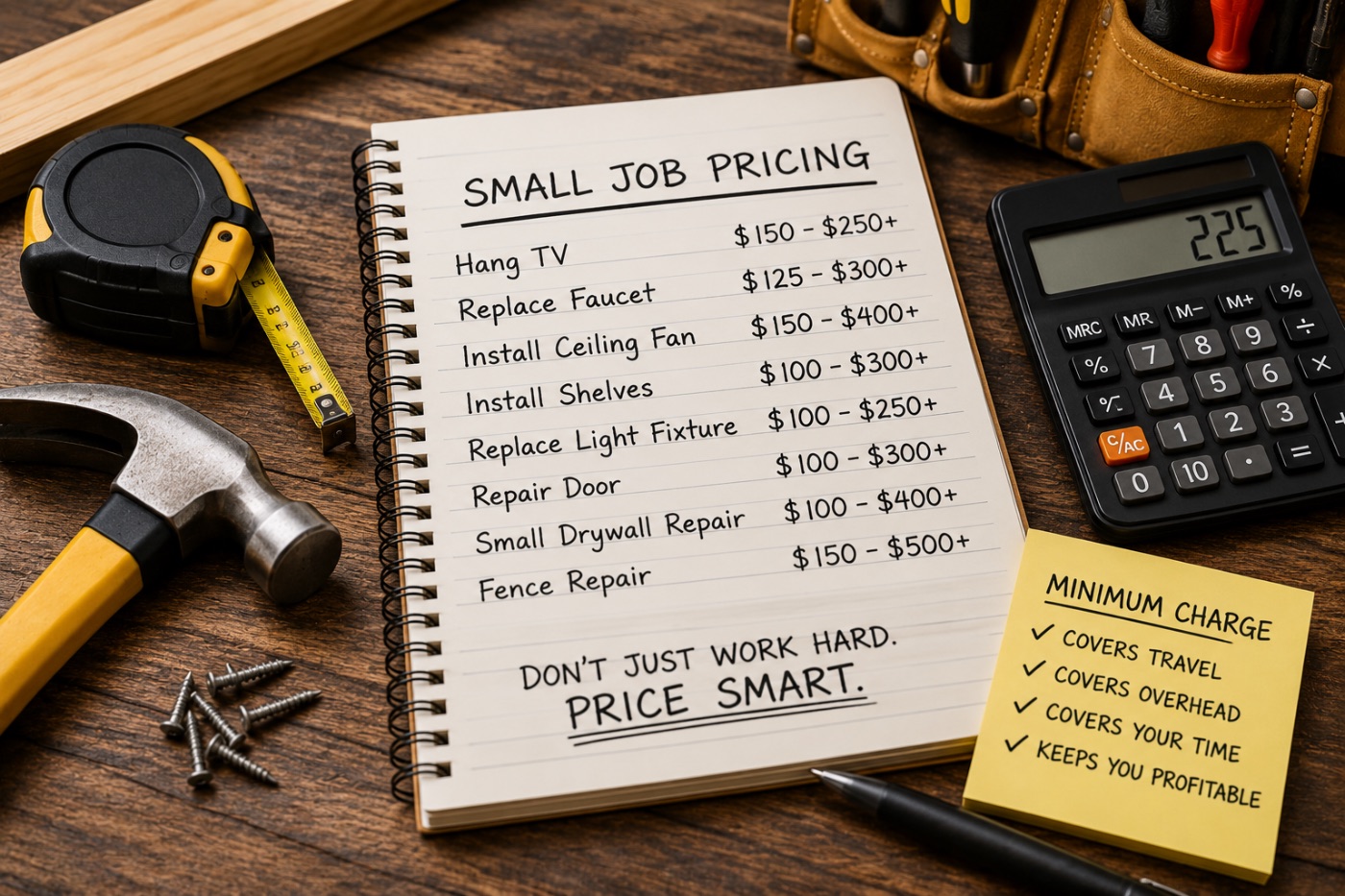
Every market is different, but here are examples of how small jobs might be priced:
* Hang a TV — $100–$250+
* Replace a faucet — $125–$300+
* Install a ceiling fan — $150–$400+
* Install a garbage disposal — $150–$350+
* Repair a door — $100–$300+
* Install shelves — $100–$300+
* Replace a light fixture — $100–$250+
* Small drywall repair — $100–$400+
* Fence repair — $150–$500+
The actual price depends on factors such as your ZIP code, materials, difficulty, access, travel, and how long the job is expected to take.
 Bundle Multiple Small Jobs Together
One of the best ways to make small jobs more profitable is to combine several tasks into one visit.
For example, a customer might originally call you to replace a faucet. Once you’re there, they may also need:
* A door adjusted
* A TV mounted
* Shelves installed
* A light fixture replaced
Instead of making multiple trips for individual small jobs, you can price the entire punch list as one project.
This saves travel time and can increase your average job value significantly.
You can also offer something like:
“My minimum service call is $125, and we can knock out as many small items as possible while I’m there.”
That’s a great value proposition for customers and helps make your schedule more profitable.
Don’t Forget Materials and Overhead
Your labor price shouldn’t have to cover everything.
When estimating a small job, consider:
* Labor
* Materials
* Travel
* Tool wear and replacement
* Fuel
* Insurance
* Taxes
* Payment processing fees
* Business overhead
* Profit
A common mistake is charging only enough to pay yourself for the time spent working.
Your business still needs to make a profit after all of its expenses.
A Simple Formula for Pricing Small Jobs
A good starting point is:
Minimum Service Charge + Labor + Materials + Profit
For example:
$125 minimum service charge + $75 in materials + additional labor = final job price
Or, for a simple flat-rate project:
Estimated labor time × your target hourly rate + materials + overhead/profit
The key is to make sure your price reflects the total value and cost of completing the job, not just the number of minutes your hands are physically working.
Use Your ZIP Code When Pricing Jobs
A $150 handyman job in one city might reasonably cost $300 in another.
Local labor rates and customer expectations can vary dramatically depending on where you work.
That’s why it’s important to consider:
* Your ZIP code
* Local cost of living
* Competition
* Labor rates in your area
* Job difficulty
* Materials and travel
If you’re not sure what to charge, use a pricing tool to get a starting point based on the job and your location.
Get a Quick Price Estimate With JobPriceNow
Not sure what to charge for your next small job?
Describe the project, enter the ZIP code, and get a fast estimate with JobPriceNow.
You can use it for handyman work, home repairs, construction projects, installations, and more.
No login. No subscription required. Just describe the job and get a starting price.
👉 JobPriceNow.com
Final Thoughts
Small jobs can be some of the most profitable work you do—but only if you price them correctly.
Don’t make the mistake of charging strictly by the hour for every small task. Set a reasonable minimum service charge, account for your travel and overhead, price the value of your experience, and bundle multiple jobs whenever possible.
The goal isn’t simply to stay busy.
The goal is to make every trip worth your time.
Bundle Multiple Small Jobs Together
One of the best ways to make small jobs more profitable is to combine several tasks into one visit.
For example, a customer might originally call you to replace a faucet. Once you’re there, they may also need:
* A door adjusted
* A TV mounted
* Shelves installed
* A light fixture replaced
Instead of making multiple trips for individual small jobs, you can price the entire punch list as one project.
This saves travel time and can increase your average job value significantly.
You can also offer something like:
“My minimum service call is $125, and we can knock out as many small items as possible while I’m there.”
That’s a great value proposition for customers and helps make your schedule more profitable.
Don’t Forget Materials and Overhead
Your labor price shouldn’t have to cover everything.
When estimating a small job, consider:
* Labor
* Materials
* Travel
* Tool wear and replacement
* Fuel
* Insurance
* Taxes
* Payment processing fees
* Business overhead
* Profit
A common mistake is charging only enough to pay yourself for the time spent working.
Your business still needs to make a profit after all of its expenses.
A Simple Formula for Pricing Small Jobs
A good starting point is:
Minimum Service Charge + Labor + Materials + Profit
For example:
$125 minimum service charge + $75 in materials + additional labor = final job price
Or, for a simple flat-rate project:
Estimated labor time × your target hourly rate + materials + overhead/profit
The key is to make sure your price reflects the total value and cost of completing the job, not just the number of minutes your hands are physically working.
Use Your ZIP Code When Pricing Jobs
A $150 handyman job in one city might reasonably cost $300 in another.
Local labor rates and customer expectations can vary dramatically depending on where you work.
That’s why it’s important to consider:
* Your ZIP code
* Local cost of living
* Competition
* Labor rates in your area
* Job difficulty
* Materials and travel
If you’re not sure what to charge, use a pricing tool to get a starting point based on the job and your location.
Get a Quick Price Estimate With JobPriceNow
Not sure what to charge for your next small job?
Describe the project, enter the ZIP code, and get a fast estimate with JobPriceNow.
You can use it for handyman work, home repairs, construction projects, installations, and more.
No login. No subscription required. Just describe the job and get a starting price.
👉 JobPriceNow.com
Final Thoughts
Small jobs can be some of the most profitable work you do—but only if you price them correctly.
Don’t make the mistake of charging strictly by the hour for every small task. Set a reasonable minimum service charge, account for your travel and overhead, price the value of your experience, and bundle multiple jobs whenever possible.
The goal isn’t simply to stay busy.
The goal is to make every trip worth your time.